
Running Google Ads often comes down to one big question: how much should you bid to get the best results? Manual bidding can work, but it needs constant monitoring and quick decisions. This is where automated bidding comes in. The core benefit of Google Ads automated bidding is its ability to set smarter bids using real-time data that humans simply cannot process at the same speed. Instead of guessing or adjusting bids daily, advertisers let Google handle bidding with clear goals in mind.
What Automated Bidding Means in Google Ads?
Automated bidding is a feature in Google Ads where Google automatically sets your bids for each auction. Instead of you deciding how much to bid for every keyword, Google adjusts bids based on the goal you select.
With manual bidding, advertisers:
- Set fixed bids
- Adjust bids based on assumptions
- Spend time checking performance daily
With automated bidding, Google:
- Adjusts bids for every search
- Uses live signals
- Focuses on achieving your campaign goal
This shift helps advertisers move from guesswork to data-backed decisions.
The Core Benefit of Google Ads Automated Bidding
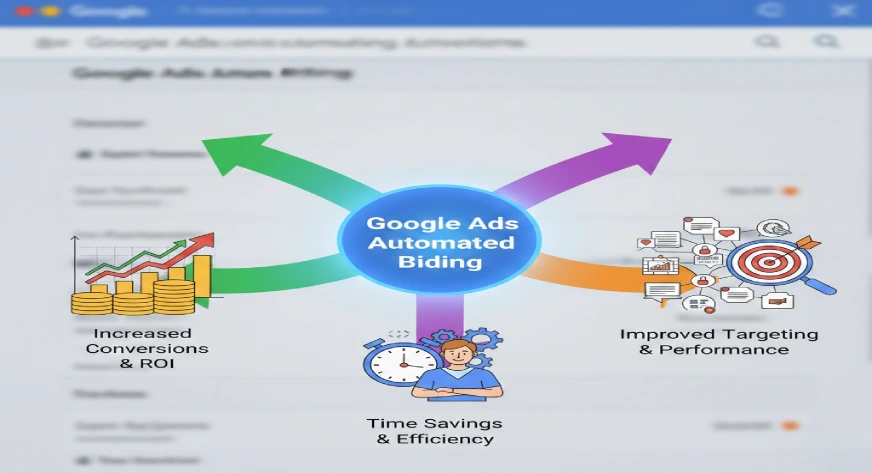
The core benefit of Google Ads automated bidding is real-time bid optimisation using multiple signals at once.
Google evaluates each ad auction individually and decides how much to bid based on the likelihood of achieving your goal, such as a sale or a lead. This happens instantly and repeatedly throughout the day.
Humans cannot:
- Analyse thousands of signals in real time
- Adjust bids for every single search
- React instantly to user behavior changes
Automated bidding does all of this automatically, which leads to better efficiency and more consistent results.
How Automated Bidding Uses Data to Improve Results?
Google Ads automated bidding works by analysing several signals together, not in isolation.
1 User Device, Location, and Timing
Google checks whether the user is on mobile or desktop, where they are located, and what time they are searching. For example, a user searching during business hours may have higher intent than someone browsing late at night.
2. Search Intent and Keywords
Google looks at how specific the search query is. A detailed search usually signals higher intent, so bids are adjusted accordingly.
3. Past Conversion Behaviour
If similar users have converted earlier, Google increases bids to capture those opportunities again.
4. Competition in the auction
Bids change depending on how competitive the auction is at that exact moment, helping you stay relevant without overspending. This combination of signals is what makes automated bidding powerful.
Also Read, What is the Audience Network in Facebook Ads?
Common Automated Bidding Strategies and Their Purpose
Google Ads offers different automated bidding strategies, each designed for a specific goal.
Maximize Conversions
This strategy focuses on getting the highest number of conversions within your budget. It works well when you want volume and already have conversion tracking set up.
Target CPA ( Cost Per Action)
Here, Google tries to get conversions at an average cost you define. It is useful for businesses that need predictable lead costs.
Target ROAS (Return on Ad Spend)
This strategy is popular with eCommerce brands. Google adjusts bids to generate revenue while maintaining a desired return.
Maximize Conversion Value
Instead of focusing on the number of conversions, this strategy focuses on higher-value conversions, making it suitable for businesses selling products at different price points. Each strategy uses automated bidding but serves a different business goal.
Why Automated Bidding Saves Time and Effort?
Manual bidding requires regular checks, testing, and constant updates. Automated bidding reduces this workload significantly.
Advertisers save time because:
- Bids are adjusted automatically.
- Fewer daily optimisations are needed
- Focus shifts to strategy instead of micromanagement
For small teams or solo business owners, this time saving is a major advantage and allows attention to be placed on improving ads, landing pages, and offers.
How Automated Bidding Improves Budget Usage?
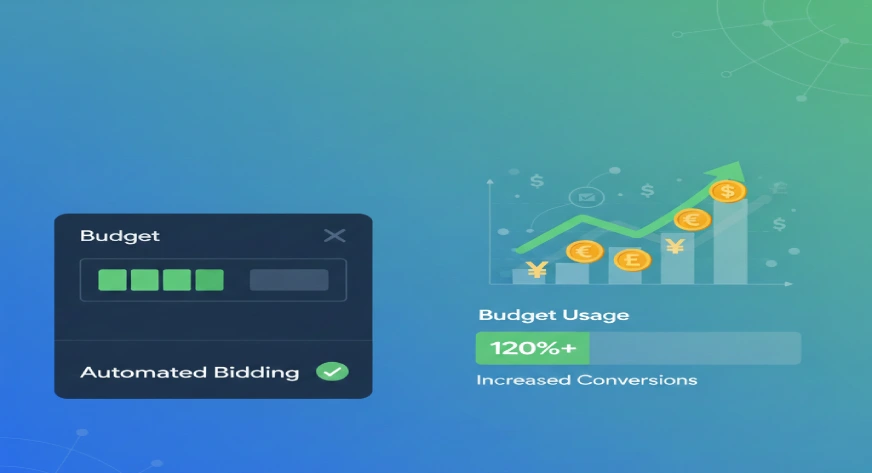
Automated bidding helps use budgets more efficiently by directing spend where results are more likely.
It works by:
- Reducing bids for low-quality searches
- Increasing bids when conversion chances are high
- Avoiding wasted spend on poor-performing traffic
Even with limited budgets, automated bidding helps ensure money is spent with purpose rather than spread thin across random clicks.
Situations Where Automated Bidding Works Best
Automated bidding performs best when there is enough data for Google to learn from.
It works especially well for:
- High-traffic campaigns
- Lead Generation Ads
- Online Stores With Conversation Tracking
- Campaigns focused on sales or sign-ups
For new campaigns, results may take some time as Google goes through a learning phase. Patience during this stage is important.
Common Myths About Google Ads Automated Bidding
Many advertisers hesitate because of misunderstandings.
Google Just Wants to Spend more Money
Google focuses on achieving your selected goal, not just increasing spend. Poor setup leads to poor results, not the bidding system itself.
Manual Bidding Gives more Control
While manual bidding feels hands-on, it lacks real-time adjustments and advanced data analysis.
Automated bidding works instantly
Automated bidding needs time and data. Initial fluctuations are normal during the learning phase.
Understanding these points helps set realistic expectations.
Things to Set Right Before Using Automated Bidding
To get good results, certain basics must be in place.
Conversion Tracking
Without accurate tracking, Google cannot optimise bids properly.
Clear campaign goals
Your bidding strategy should match what you want to achieve, whether leads or revenue.
Enough data volume
Automated bidding performs better when it has sufficient data to learn from.
Patience during learning phase
Frequent changes during learning can affect performance negatively. These steps help automated bidding perform as intended.
Wrapping Up
The core benefit of Google Ads automated bidding lies in its ability to use real-time data, multiple signals, and smart algorithms to make better bidding decisions than manual methods. It saves time, improves budget usage, and helps advertisers focus on strategy rather than constant adjustments. When set up correctly, automated bidding supports both beginners and experienced marketers in running more efficient Google Ads campaigns.
Many businesses struggle not because automated bidding fails, but because campaigns are not structured correctly from the start. At WebWorks Co., digital marketing strategies focus on aligning goals, tracking, and bidding methods so Google Ads work smoothly instead of feeling confusing.